Most people assume Freemasonry is either a harmless fraternal organization full of old men doing charity work, or a shadowy global conspiracy controlling world governments. The truth is more interesting than either version.
By Butch Kliemann · Hidden History
I know because I was inside it.
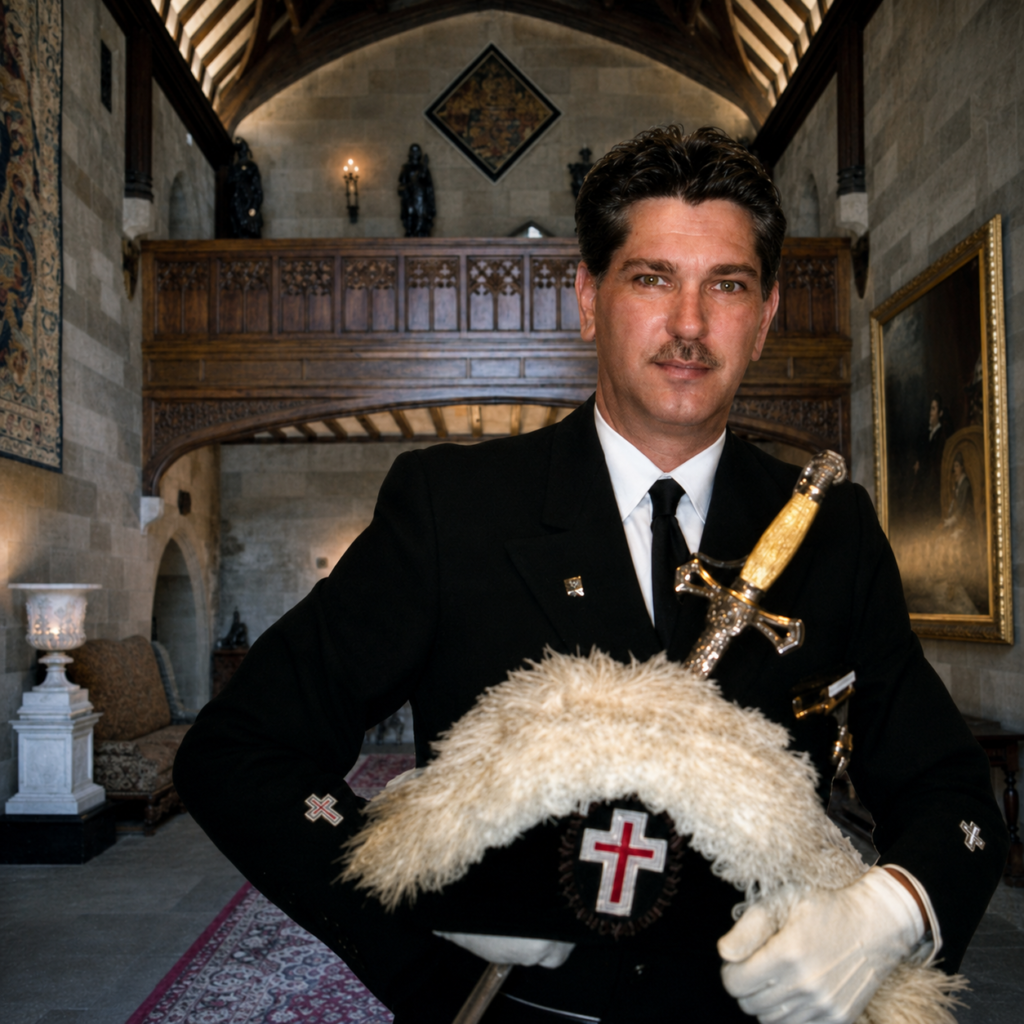
In my 30s I became a Scottish Rite Freemason and a Masonic Knights Templar. I wasn’t there to write a book or expose anyone. I went because I’d been asking questions about this organization since childhood and I wanted answers from the inside. What I found was a brotherhood layered with genuine history, encoded symbolism, and a carefully maintained silence about its own origins that most members never question.
What follows are the things Freemasonry has never publicly admitted, not because there’s a conspiracy to suppress them, but because most Masons simply don’t know them. And the ones who do rarely talk.
THE TEMPLAR CONNECTION THEY WON’T CONFIRM
Ask a Freemason whether the organization descends from the Knights Templar and most will give you a rehearsed answer. They’ll tell you the Templar connection is mythology. Romantic legend. That modern Freemasonry traces its documented origins to the stonemason guilds of medieval Europe, nothing more.
What they won’t tell you is that the symbolism doesn’t lie.
The Knights Templar were arrested on Friday, October 13th, 1307, on orders from King Philip IV of France and with the blessing of Pope Clement V. The charges were heresy, blasphemy, and secret rituals too obscene to describe in public. Most of the leadership was tortured into confession and burned. The order was officially dissolved in 1312.
But organizations with centuries of accumulated knowledge, wealth, and network don’t simply disappear because a king signs a document. The Templars had strongholds in Scotland, a country outside Philip’s reach. They had members scattered across Europe. They had secrets worth protecting.
The stonemason guild explanation for Freemasonry’s origins conveniently appears in the historical record roughly where the Templar trail goes cold. The symbolism that fills Masonic ritual, the geometry, the temple building mythology, the degrees of initiation, the sworn oaths of secrecy, maps almost perfectly onto what we know of Templar practice. That’s not coincidence. That’s continuity.
THE DEGREES AND WHAT THEY ACTUALLY MEAN
Freemasonry is structured around degrees of initiation. In the York Rite and Scottish Rite systems used in America, a Mason can advance through dozens of degrees, each one revealing more of the order’s symbolic framework. The first three degrees, Entered Apprentice, Fellow Craft, and Master Mason, are the foundation.
What most outsiders don’t realize is that the degree system isn’t just ceremony. It’s a transmission of knowledge encoded in allegory. The story of Hiram Abiff, the master builder of Solomon’s Temple who is murdered rather than reveal the secrets of his craft, sits at the heart of the third degree ritual. It is not told as history. It is performed. The initiate experiences it.
This is initiation in the oldest sense of the word. The same structure used by the mystery schools of ancient Egypt and Greece. The candidate doesn’t just learn something. He goes through something. And what he carries out of that room is different from what he brought in.
The higher degrees build on this foundation in ways most Masons in the lower degrees never fully grasp. By the time a Scottish Rite Mason reaches the 32nd degree, he has been exposed to a symbolic framework connecting Solomon’s Temple, the Crusades, the Templars, Kabbalistic tradition, and the suppressed history of the medieval Church. Most members absorb the ritual without understanding what it’s actually pointing at.
THE SILENCE ABOUT PHILIP IV AND CLEMENT V
One of the most telling freemasons secrets is what the organization chooses not to say about the destruction of the Knights Templar.
The suppression of the Templars in 1307 was not a religious purification. It was a political theft. Philip IV of France was deeply in debt to the Templar banking network, which had effectively invented the concept of international finance. He couldn’t repay what he owed. So he destroyed the creditor.
Pope Clement V, who should have protected a papal military order, was a French pope elected under Philip’s direct influence. He cooperated with the arrest, the torture, the show trials, and the dissolution. He was rewarded with continued French support for the papacy, which had by then relocated to Avignon, firmly under the French crown’s shadow.
This is the historical moment that Freemasonry’s Templar degrees are built around. The betrayal of an order by the two most powerful institutions in the medieval world. A king and a pope conspiring to destroy what they couldn’t control.
Masonic ritual preserves the memory of that betrayal in symbolic form. The murder of Hiram Abiff is not just a building metaphor. It is a coded memory of what happened to the Templars. And the obligation every Master Mason takes, to avenge that murder, carries a weight most of them never fully consider.
WHAT THE LODGE WON’T TELL YOU AT THE DOOR
None of this is hidden in the sense that it has been locked in a vault somewhere. Most of it is available to anyone willing to read seriously and connect the threads. What Freemasonry has always relied on is not secrecy exactly, but complexity. The organization is layered enough that most people, including most Masons, never get to the bottom of it.
The fraternal surface is real. The charity work is genuine. The handshakes and the aprons and the lodge dinners are exactly what they look like. But underneath that surface is a symbolic architecture that connects to some of the most consequential and suppressed history of the Western world.
That’s what I’ve spent years writing about. Not to tear the organization down, but because that history deserves to be understood. The Templars deserved better than what Philip and Clement gave them. And the people who carry their legacy forward deserve to know what they’re actually carrying.
If you want to go deeper on the real history behind Freemasonry and its Templar origins, my book covers what the degrees point to and why it matters.
Browse books on Amazon: https://amazon.com/author/bernardkliemann