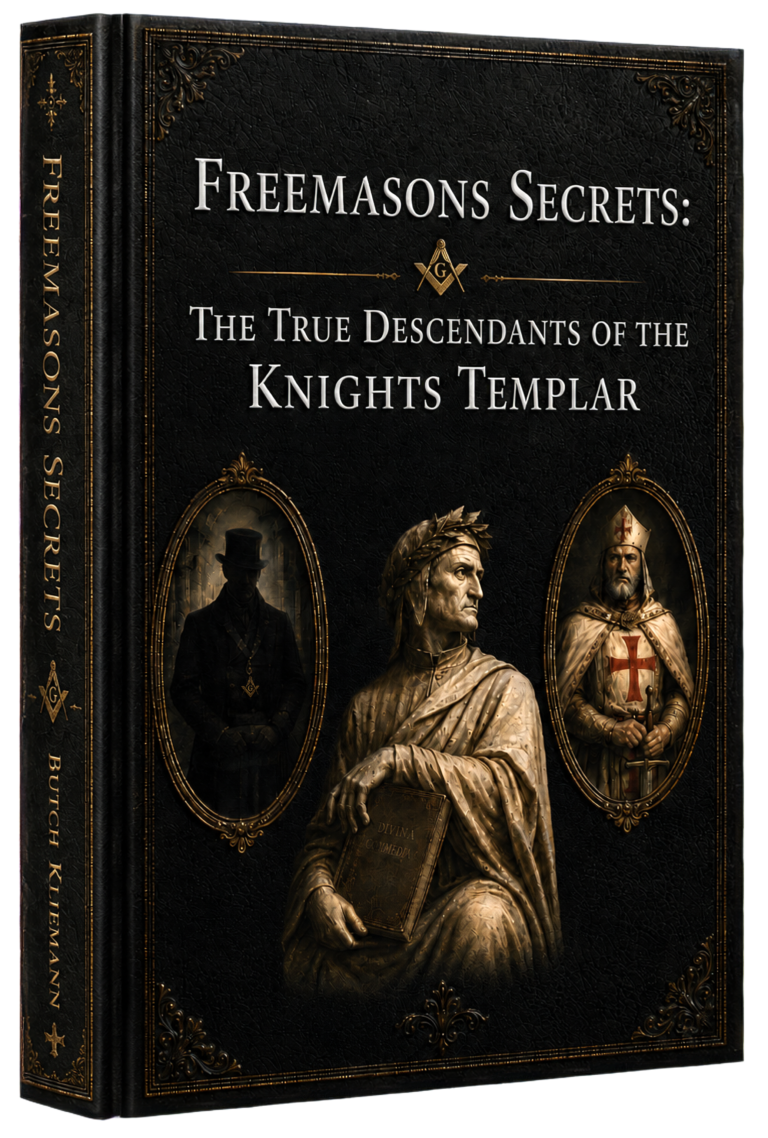
Freemasons Secrets:
The True Descendants of the Knights Templar
A revised and expanded investigation into the hidden connections between the Knights Templar, Freemasonry, Dante, the Catholic Church, and the forgotten conflicts that shaped the modern world.
About the Book
What if the accepted origin of Freemasonry is missing the most important part of the story?
For centuries, Freemasonry has been explained through the familiar story of medieval stonemasons and operative guilds. But the symbols, conflicts, and rival traditions surrounding the Craft point toward a deeper and more dangerous history. In this revised and expanded edition, Butch Kliemann follows the trail through medieval Europe, the fall of the Knights Templar, Dante’s exile, papal politics, and the later formation of the Grand Lodge of England.This is not simply a book about Freemasonry. It is a search for the forgotten world that shaped it.
Inside the Book
• Why the Knights Templar were destroyed in 1307
• How Dante’s world was shaped by the conflict between Church and Crown
• The Pope Who Would Have Saved the Knights Templar
• Why the 1717 Grand Lodge may not have been the beginning of Freemasonry
• What the Ancients and Moderns were really fighting over
• Why the Royal Arch and Triple Tau matter
• How Catholic history, Templar history, and Masonic history may be more connected than most readers realize
The Dante Connection
In October 1301, Dante Alighieri left Florence as the city’s ambassador to Rome, sent to meet with Pope Boniface VIII.While Dante was away, Florence fell into chaos. The Black Guelphs seized control, Dante was condemned in absentia, and the poet would never return home.From that moment forward, Dante became more than an exiled poet. He became an eyewitness to one of the most dangerous struggles of the Middle Ages: the conflict between pope, crown, city, and secretive military orders. The same world that drove Dante into exile would soon lead to the fall of the Knights Templar on Friday, October 13, 1307.
The Masonic Mystery
Freemasonry, as it stands today, entered the public record in 1717. Before that date, the historical trail becomes far less clear. On St. John the Baptist’s Day, four London lodges united to form the first Grand Lodge of England. That moment would reshape the fraternity. But why was it needed? And why did a larger body of Freemasons later rise up to oppose them? Was this simply organization, or was it another struggle over authority, legitimacy, and hidden tradition?
Buy the Book
Available through major book retailers
